
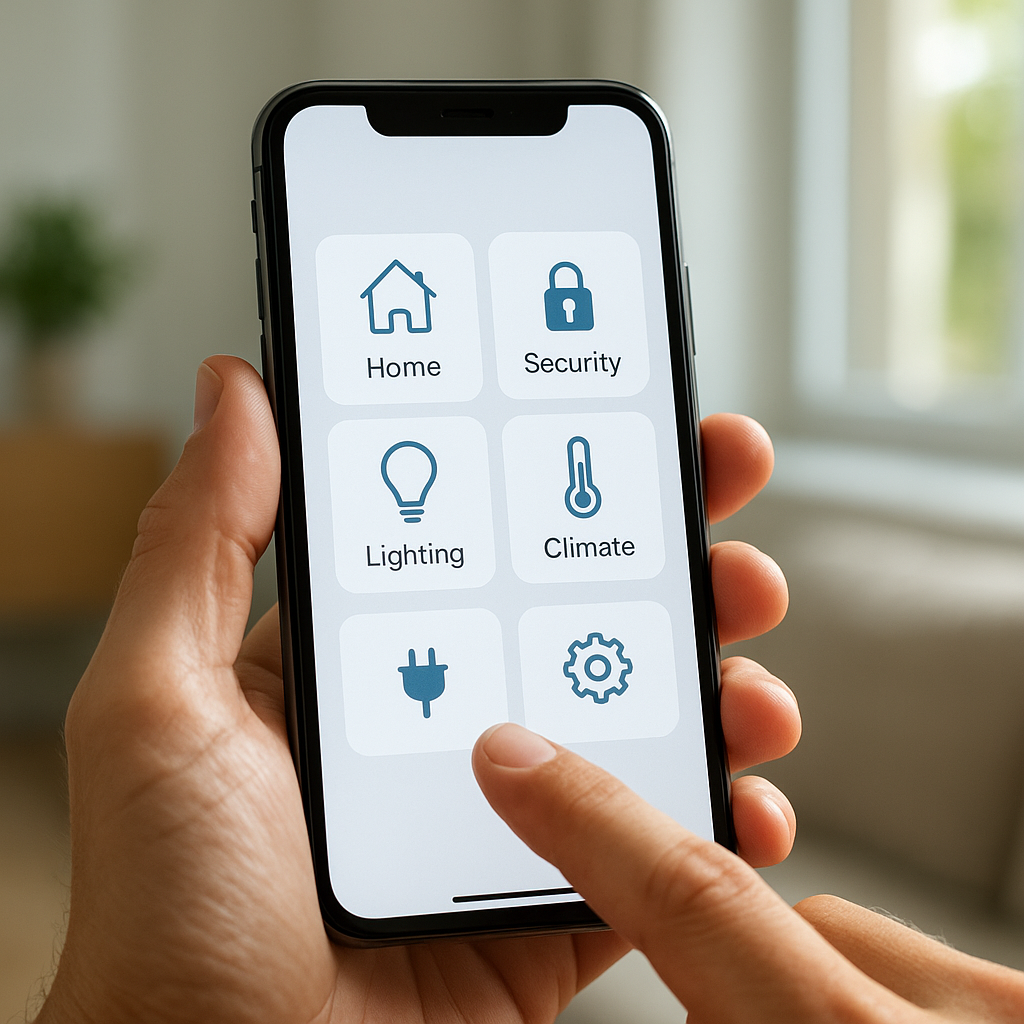
Smart home application: Why Your Phone Is Now the Remote for Everything
I still remember when flipping a single switch required three different remotes and a bit of luck with the Wi-Fi router. Back in the early twenties, setting up connected gadgets felt like solving a puzzle with missing pieces. Today, the landscape has shifted completely. We are no longer dealing with isolated toys. We are managing entire ecosystems. If you have ever stared at five separate dashboards wondering why the thermostat refuses to talk to the blinds, you already know the core problem. Fragmentation. That is exactly why a unified smart home application stopped being a niche luxury and became a daily necessity.
Finding the best home automation app in a crowded market
The industry exploded overnight. Manufacturers launched proprietary hubs, then quickly realized nobody wants ten separate icons on their lock screen. The race for the best home automation app kicked off around interoperability standards. We moved from closed gardens to open protocols. Matter changed the architechture of how devices communicate. Suddenly, a sensor from Shenzhen could handshake with a plug from Moscow without jumping through API hoops. But integration is only half the battle. The real challenge lies in creating an interface that does not require a degree in computer science to operate.
Why a smart home app for all devices matters more than specs
Let us cut through the marketing noise. Processor speed and RAM on your phone mean nothing if the software cannot handle concurrent requests from a dozen endpoints. I tested dozens of setups over the last three years. The winners always prioritize local processing over cloud dependency. Latency kills the vibe. You want the lights to respond when you tap the screen, not three seconds later after a server in another country blinks. A reliable smart home app for all devices must support direct LAN routing. If your internet drops, the system should not collapse into digital chaos.
- Check local execution capabilities before buying hardware
- Prioritize platforms that support custom scripts and macros
- Verify firmware update schedules to avoid forced downtime
How smart home applications evolved from toys to infrastructure
Look at the timeline. Five years ago, automation meant scheduling a vacuum to run while you were at work. Basic rules. If this, then that. Now we are looking at predictive behavior. The software learns your habits. It adjusts humidity before you wake up. It dims the screen when ambient light drops. This shift did not happen overnight. It required massive datasets, edge computing, and standardized security layers. The modern smart home applications do not just execute commands. They anticipate them.
Interoperability is not about making every gadget speak the same language. It is about building a translator that never misses a beat.
Picking the best smarthome app without the headache
When you are shopping for the best smarthome app, ignore the shiny UI screenshots. Focus on the backend. Does it support local fallback? Can you write automations without hitting a paywall? I ran into too many systems that lock advanced scheduling behind subscription tiers. A mature platform should let you map out complex routines on day one. Check the compatibility list. If it only plays nice with three brands, you are buying a walled garden. You want a bridge, not a fence.
| Feature | Legacy Setup (2020) | Modern Architecture (2025+) |
|---|---|---|
| Connectivity | Proprietary Wi-Fi only | Thread, Zigbee, Matter over LAN |
| Response Time | Cloud-dependent, 2-4 sec | Local edge processing, under 200 ms |
| Security | Basic password auth | End-to-end encryption, local tokens |
| Customization | Fixed dashboards | Drag-and-drop logic builders |
The reality behind the best app to control smart home
Control is a heavy word. True control means transparency. You should know exactly what data leaves your network and what stays on your router. The best app to control smart home environments gives you granular permissions. You can isolate cameras from the main network, restrict voice assistants from accessing lock codes, and set maintenance windows that do not interrupt your daily flow. This is where adult users separate themselves from early adopters. Security is not a toggle. It is a habit.
Why an app to control all smart devices requires protocol mastery
Under the hood, everything communicates through packets. The magic happens when the software normalizes these packets into a single dashboard. An app to control all smart devices needs a robust translation layer. It must parse Zigbee clusters, map MQTT topics, and handle Wi-Fi provisioning without dropping connections. I have seen setups fail because the hub could not handle more than forty simultaneous messages. Scale matters. Test the limits before you commit to a full-house deployment.
Recent industry reports from regional tech analysts confirm that local development teams are finally catching up on ecosystem integration. You can read the full breakdown of compatibility standards at habr.com. The shift toward localized data processing has reduced latency significantly across the region.
Evaluating the best app to control all smart home devices in 2026
The market matured. Hype faded. Now we judge tools by uptime and stability. The best app to control all smart home devices does not crash during firmware updates. It handles device migrations gracefully. It offers backup and restore functions that actually work. I keep a local snapshot of my configuration files. When a power surge fried my main router last winter, I restored the entire setup in under twelve minutes. That is the difference between a toy and a tool.
What makes the best home control app stand out
At the end of the day, usability wins. You want a clean hierarchy. Rooms first. Then device types. Then status indicators. The best home control app respects cognitive load. It does not flood you with notifications. It groups similar actions. It lets you create macro commands for complex scenarios. I still tweak my automations every few months. Seasons change. Habits shift. The software must adapt without requiring a complete rewrite. That is the real benchmark. Everything else is just marketing fluff.
If you are rebuilding your setup from scratch, start with the network. Wire your backbone. Isolate IoT traffic. Then pick the software that respects your architechture. The rest follows naturally. No magic. Just solid engineering.